A solar water pump uses panels to run a pump directly during daylight. It usually fills a storage tank instead of using batteries, so the tank becomes your "battery". To size one you need three numbers: how much water you need per day, the total head (the vertical lift plus friction losses), and your water source's safe yield. Correctly sized, it removes diesel costs and generator trips entirely.
For many Kenyan farms, estates, schools and homesteads, water is the single biggest daily operating challenge, and pumping it is one of the biggest costs. Diesel is expensive and has to be transported. Grid power may be unreliable or absent entirely. That's why solar water pumping has become one of the most practical solar investments in the country.
This guide explains how solar pumps work, how to size one properly, what it costs to run compared with diesel, and what information you need before you ask for a quote.
How a solar water pump works
A solar pumping system is simpler than a home solar system. The main parts are:
- Solar panels that generate power during daylight.
- A pump controller or solar pump inverter that manages the pump's speed and protects it from dry running, overload and voltage problems.
- The pump: submersible for boreholes and deep wells, or surface pumps for rivers, dams, shallow wells and tanks.
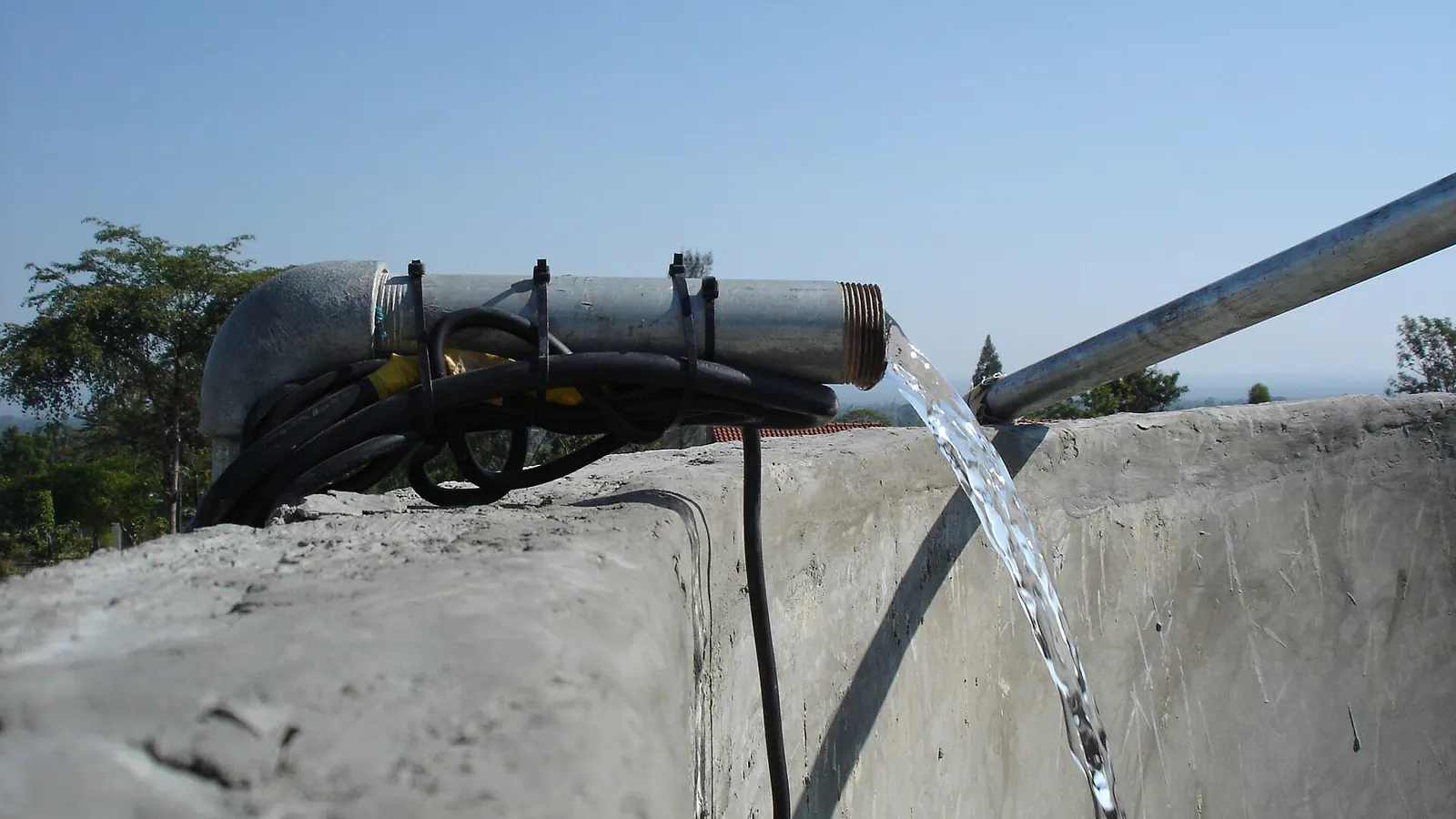
- A storage tank, ideally elevated so water flows by gravity.
The key design idea: store water, not electricity. The pump runs whenever the sun shines and fills a tank. You then draw water from the tank for your household, livestock or irrigation at any time. Because there's no battery bank, the system is simpler, cheaper and has fewer parts to wear out.
Types of solar pumps
| Pump type | Best for | Notes |
|---|---|---|
| Submersible (borehole) pump | Boreholes and deep wells | Installed below the water level; sized to depth and yield |
| Surface pump | Rivers, dams, shallow wells, tanks, pressure boosting | Limited suction lift; easier to access for servicing |
| DC solar pump | Small to medium systems | Runs directly on DC from panels; efficient at low power |
| AC pump with solar pump inverter | Medium to large systems, retrofits | Can often reuse existing AC pumps; some inverters also accept grid or generator input |
Sizing a solar pump: the three numbers that matter
1. Daily water requirement
Add up how much water you need every day, in litres or cubic metres (1 m³ = 1,000 litres). Consider:
- Household use, including staff housing
- Livestock: dairy cattle need far more water than calves or goats, and needs rise in hot weather and for lactating animals
- Irrigation: depends on the crop, growth stage, soil, season and method. Drip irrigation uses much less water than flood or overhead sprinklers.
Always design for your peak season, usually the hot, dry months when both crops and animals need the most.
2. Total dynamic head
Head is the total height the pump must lift the water, plus losses. It includes:
- The pumping water level in the borehole (not just the static level; it drops when pumping)
- The height of the tank above ground, including the tank stand
- Friction losses in the pipe, which increase with distance, flow rate and smaller pipe diameters
A pump that easily moves water 20 metres may struggle at 120 metres. Head is where most undersized systems go wrong.
3. Source yield
Your borehole or well can only deliver so much water per hour without drawing down too far. Your borehole test report should show the safe yield. Never size a pump larger than the source can sustainably supply. Doing so risks running the pump dry and damaging both pump and borehole.
Solar vs diesel vs grid pumping
| Solar | Diesel | Grid (KPLC) | |
|---|---|---|---|
| Running cost | Very low | Fuel, oil, servicing, transport | Monthly electricity bill |
| Upfront cost | Higher | Lower | Depends on connection distance |
| Reliability | Daily, weather-dependent | Depends on fuel supply and servicing | Depends on outages |
| Remote sites | Ideal | Fuel logistics can be difficult | Often unavailable |
| Labour | Automatic | Someone must start, refuel and watch it | Automatic |
The economics usually favour solar when pumping happens every day. The upfront cost is recovered through avoided fuel and maintenance. Many farms keep an existing diesel pump or generator as backup for exceptional demand, and some solar pump inverters can accept a generator or grid input for exactly this reason.
Tank sizing: your "battery"
Because a solar pump only works in daylight, your storage tank has to cover:
- Night-time use
- Early morning demand before the pump is at full output
- Cloudy days, when pumping output drops
A common approach is to size storage for at least a full day of demand, and more for critical uses such as dairy herds or institutions. Elevating the tank gives you gravity pressure without a second pump.
Irrigation with solar: making every litre count
Solar pumping pairs naturally with efficient irrigation:
- Drip irrigation delivers water directly to roots and reduces the volume, and therefore the pump size, you need.
- Irrigating during the day from the pump directly, or from the tank by gravity, reduces the need for extra storage.
- Zoning lets you irrigate one block at a time, keeping flow rates within what the pump can supply.
Protecting your investment
- Dry-run protection: level sensors or controllers that stop the pump if water runs low.
- Tank float switches: stop pumping when the tank is full.
- Lightning and surge protection for panels and controller, which is essential on open farmland.
- Secure mounting and fencing to deter theft and protect panels from livestock.
- Regular panel cleaning, especially in dusty areas.
What to have ready before you ask for a quote
- Water source type (borehole, well, river, dam)
- Borehole depth, static and pumping water levels, and tested yield (from the drilling report)
- Distance and height from the source to the tank, and from the tank to where water is used
- Daily water need: household, livestock numbers and types, crops and irrigated area
- Any existing pump, pipes and tanks you want to reuse
Worked example: sizing for a small dairy farm
To show how the numbers fit together, here's an illustrative example. Your farm's figures will differ, so use this to understand the method, not as a design.
A farm keeps 15 dairy cows and a household of six, and irrigates a small vegetable plot with drip lines. Estimated peak-season demand: cows about 1,500 litres a day, household about 600 litres, drip irrigation about 2,000 litres. Total: roughly 4,100 litres (4.1 m³) a day. The borehole's pumping water level is 60 m, the elevated tank adds 6 m, and pipe friction is estimated at 4 m, for a total dynamic head of about 70 m. The borehole test shows a safe yield comfortably above what the pump would draw across a day of pumping.
With those three numbers (4.1 m³ per day, 70 m of head, and a yield that supports it), an installer can select a pump whose performance curve delivers the daily volume at that head within the available sun hours, and size the panel array to drive it. Storage of at least one day's demand, around 5,000 litres, would cover nights and a cloudy day.
Notice what drives the design: the head and the daily volume. Double the head and you need a very different pump; switch the vegetable plot from drip to overhead sprinklers and the daily volume, and therefore the whole system, grows.
The bottom line
Solar water pumping can make a farm or homestead independent of diesel deliveries and grid outages, with very low running costs once installed. Success depends on sizing: design for peak-season demand, account for total head honestly, respect your borehole's yield, and store water rather than electricity.
Get those right, and your pump will simply run, every sunny day, for years.
Frequently asked questions
Can a solar pump work without batteries?
Yes. Most solar pumping systems run directly from the panels during the day and store water in an elevated tank instead of storing electricity. This is simpler and cheaper than using batteries.
How deep can a solar borehole pump lift water?
Solar submersible pumps are available for a wide range of depths, including deep boreholes. The right pump depends on the total head and daily volume, so sizing must be based on your borehole's test data.
Will a solar pump work on cloudy days?
Output drops on cloudy days. Good designs allow for this with slightly larger panel capacity and enough tank storage to cover a few days of demand.
Can I replace my diesel pump with solar?
In many cases, yes. Many farms keep the diesel pump as a backup for exceptional demand while solar handles day-to-day pumping.
What information do I need before getting a quote?
Your water source type, borehole depth, static and pumping water levels and yield if known, the distance and height to your tank, and how much water you need each day.
How many solar panels does a borehole pump need?
It depends on the pump's power requirement, which in turn depends on the daily volume and total head. An installer selects the pump first and then sizes the solar array to drive it through the available sun hours.
BrightSun Solar designs and installs solar power, battery backup, solar water pumping and solar water heating for homes, businesses, farms and institutions in Nairobi and across Kenya. Installations are carried out by EPRA-licensed technicians. Why customers choose us.
Get a solar pump sized to your water needs
Tell us about your property in 60 seconds. We'll reply on WhatsApp with next steps and book a free site survey.